
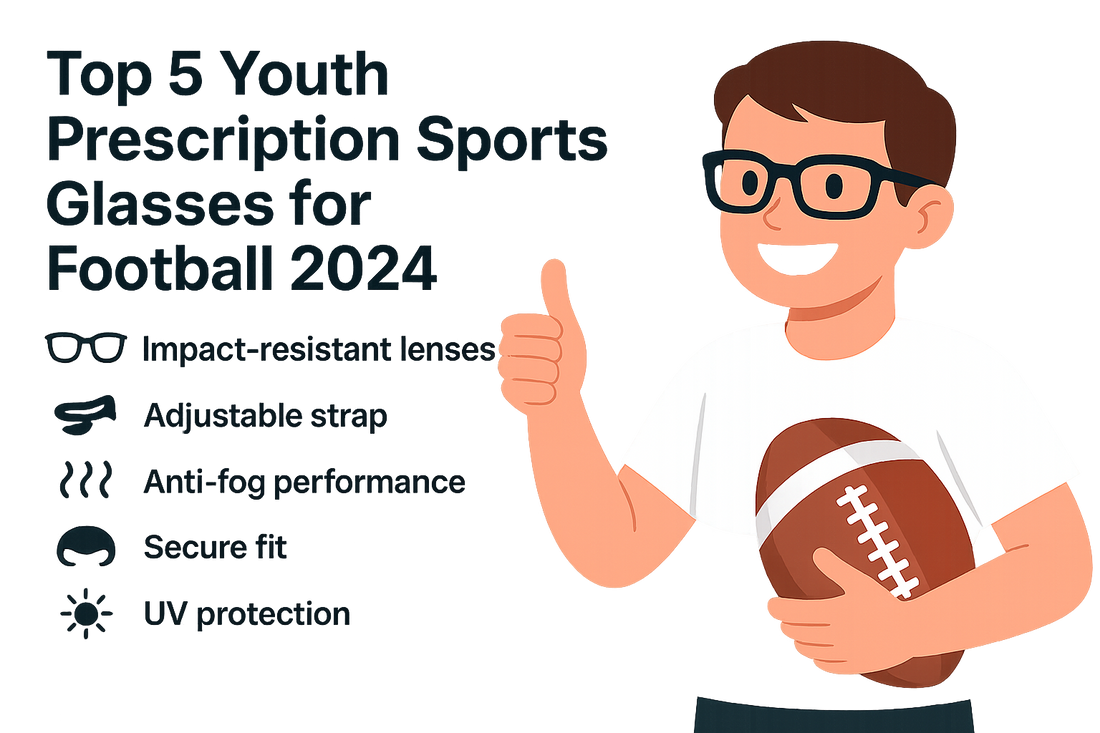
Youth Prescription Sports Glasses for Football: 5 Things to Compare
Choosing youth prescription sports glasses for football starts with the player's helmet, frame fit, and prescription needs. A frame that feels comfortable on its own can shift or press against the temples once helmet padding is in place. Compare the complete setup before deciding which pair to order.
Our kids' prescription football glasses collection includes frames available with or without a prescription. Lens choices and features differ by model. The five checks below help you compare those options.
1. Fit With the Actual Football Helmet
Have the player put on the glasses first, then the helmet, and fasten the chinstrap. Check whether padding pushes the frame down the nose or squeezes the temple arms. A low-profile frame may help with clearance, but its shape alone does not guarantee compatibility with every helmet.
Ask the child to look left, right, up, and down, then check whether removing the helmet catches the glasses. Our guide to matching kids' prescription football glasses with a helmet covers padding, strap placement, and movement checks in more detail.
2. Frame Size and Retention
Compare the frame measurements with the child's fit rather than choosing only by age. The frame should sit centered without pinching around the nose or temples. If the model has an adjustable strap, check that it lies flat and that the buckle or slider does not sit beneath a helmet pressure point.
In a safe fitting area, ask the player to settle into a stance, turn toward both sidelines, and jog gently. Recheck comfort after several minutes, and repeat the test when the child grows or the equipment changes.
3. Prescription and Lens Options
Confirm that the chosen frame can accommodate the child's prescription and that you have the measurements requested for ordering. Lens material, thickness, frame curvature, and prescription range should be considered together.
Use our prescription sports glasses Lens Finder to narrow down available lens choices, then confirm suitability for the selected model. For daytime play, review the lens's stated UV protection and available sun options; clear lenses may be preferable for evening practice.
4. Fogging and Care
Compare the ventilation features stated for each frame. If an anti-fog product is needed, use one approved for the specific lenses and coatings. Clean lenses and unobstructed vents are useful starting points, but no setup should be assumed to prevent fogging in every condition.
Teach the player to keep a clean microfiber cloth and case in the equipment bag and to remove the helmet carefully. Inspect the eyewear for loose or damaged parts before use.
5. Model Features and Team Requirements
Review the complete model's stated protective features and confirm your team or league's eyewear rules. A particular lens material or the label "sports glasses" does not establish the protective rating of the assembled eyewear. Ask your supplier to confirm any rating needed for your child's program.
Frequently Asked Questions
Can kids wear prescription glasses under a football helmet?
Compatibility depends on the glasses, prescription, helmet, and activity. Check the full setup and confirm that the eyewear meets the program's requirements.
Do football glasses need a strap?
Retention systems vary by frame. Check the model's instructions and whether its temples or strap work comfortably with the helmet padding.
Can I order the same frame without a prescription?
Yes. Every frame in BlueCut's kids' football glasses collection is available with or without a prescription. Review the specific lens options before ordering.
What if the helmet presses on the glasses?
Have the setup reviewed by an eye-care or qualified equipment professional. Do not cut helmet padding or modify the frame at home to force a fit.


